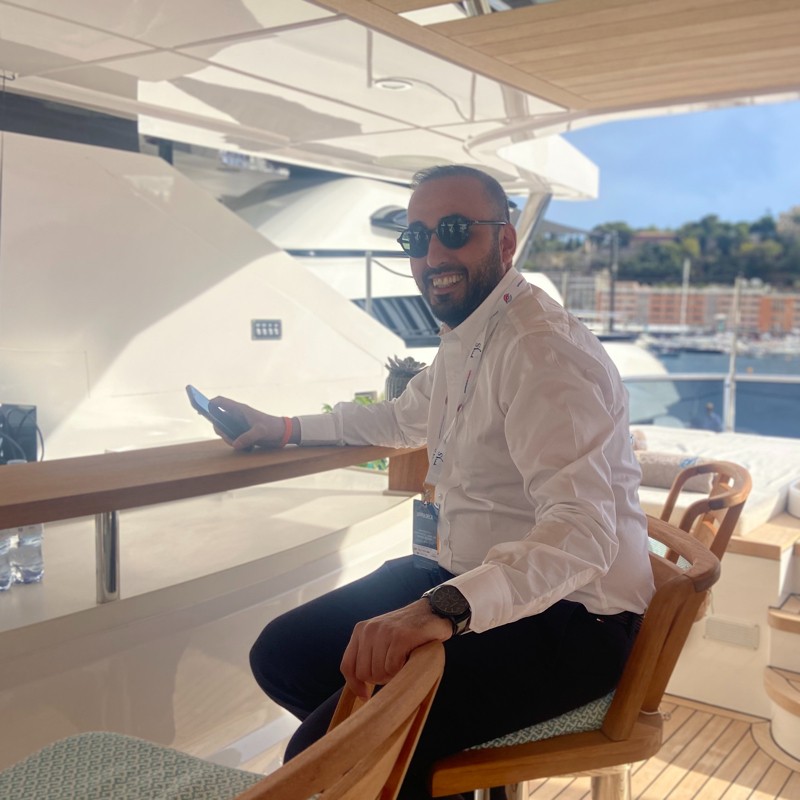
Emre Dursun · Shipyard Manager
Interview with Orion Yacht Shipyard Manager Emre Dursun
A detailed conversation with Emre Dursun on the transition from architecture to the yachting industry, the critical dynamics of project management, and the seamless synergy between design and application in collaboration with MSM Yacht Interiors.
Mr. Emre, a career journey from architecture to the yachting industry... Could you share the story behind this decision? How did your architectural education shape your perspective on this sector?
Architectural education primarily provided me with the skills to read a space, design the user experience, and balance aesthetics with function. However, over time, I realized that moving, living, and constantly changing spaces excite me more than static structures. This is exactly where the yacht industry came into play. Yachts are essentially complex architectural projects on a smaller scale. You have to solve multi-layered dynamics simultaneously, such as marine engineering, material durability, weight balance, stability, and creating maximum comfort in a limited area. This makes the architectural perspective more analytical and multi-disciplinary. The biggest motivation behind this transition was to take part in projects where design directly touches the user in a more niche, prestigious, and global field. I was particularly drawn to the refit and renovation side because it involves analyzing and reinterpreting an existing structure—a kind of "design surgery." Today, I can clearly say that Architecture is my foundation, while the yacht sector is a dynamic and international stage where that foundation constantly evolves.
You are experienced in two important areas: both design studio and project management. From your perspective, what are the most critical elements/details that show a project is successfully managed?
Let me be very clear: the quality of process management, not the beauty of the design, determines whether a project is truly "successful." According to my perspective, the critical elements are:
1. Correct Start (reading user expectations and setting realistic budgets/timelines).
2. Design-Engineering Balance (designs must be "manufacturable," not just "drawable").
3. Detail Solution Quality (the difference in the yacht industry is determined by details like material transitions and service access).
4. Interdisciplinary Coordination (solving clashes before they reach the field).
5. Time and Decision Management (avoiding indecision to keep the process fluid).
6. Yard-Field Reality (considering the application capability of the craftsmen).
7. Expectation Management (transparency and minimizing surprises). In short, my clearest criterion for success is that the project not only looks good but works flawlessly, is delivered on time, and leaves no room for "I wish we had..."
1. Correct Start (reading user expectations and setting realistic budgets/timelines).
2. Design-Engineering Balance (designs must be "manufacturable," not just "drawable").
3. Detail Solution Quality (the difference in the yacht industry is determined by details like material transitions and service access).
4. Interdisciplinary Coordination (solving clashes before they reach the field).
5. Time and Decision Management (avoiding indecision to keep the process fluid).
6. Yard-Field Reality (considering the application capability of the craftsmen).
7. Expectation Management (transparency and minimizing surprises). In short, my clearest criterion for success is that the project not only looks good but works flawlessly, is delivered on time, and leaves no room for "I wish we had..."
In today's world where technology is developing at a breakneck speed, the yacht industry is also getting its share of this change. In this rapid change process, what are the issues that concern or challenge you the most?
The most challenging issue is using technology in the right "dosage." Today, yachts are smarter and more complex than ever, but excessive automation can sometimes create maintenance and operational problems instead of facilitating the user experience. Another issue is the pressure of speed, which can negatively affect detail quality and correct decision-making processes. Regarding sustainability, it is a great trend, but it is sometimes handled with marketing language rather than real engineering. For me, the real issue is not increasing technology for the sake of it, but using it in the right place, in the right way, and sustainably.
Mr. Emre, Turkey has significantly increased its momentum in the yacht industry, especially after the pandemic period. As a professional in the sector, how do you evaluate this development? Could I get your comments on the trends in yacht design for the upcoming period?
I believe the momentum Turkey has gained is a meaningful rise with a solid foundation. Our production capability, flexible working structure, and ability to solve difficult projects have brought Turkey to the forefront. We are now positioned as a reliable and competent center, especially in refit and custom production, not just a "cost-effective" one. For this to be sustainable, we need to strengthen project management discipline and brand perception. Regarding design trends, a simpler, timeless, and user-oriented approach is emerging. Yachts are being treated as real living spaces where functionality is at the forefront and the relationship between outdoor and indoor spaces is strengthened.
How does your collaboration process proceed in the projects you carry out with MSM Yacht Interiors? Can you explain how your mutual interactions are reflected in the projects?
Our collaboration with MSM Yacht Interiors is an integration-oriented process that goes far beyond the classic "designer-implementer" relationship. We involve them as early as possible; technical feedback is received while the design is still at the concept level, which significantly reduces later revisions. The "shop drawing" process is critical for the design to evolve into a flawless application on-site. The output of this model is very clear: fewer revisions, cleaner application, a more controlled process, and higher perceived quality. Most importantly, no disconnection occurs between design and implementation. A good interior project is not the success of a single party; the designer dreams, but those dreams come true through the right partners like MSM.
And let's finish with our indispensable classic question: MSM in 3 words for you?
Trust – Detail – Harmony. Trust: A structure you can lean on at every stage of the process. Detail: A fine workmanship approach that truly determines quality. Harmony: The ability of design and application to speak the same language.