Interview with Nazenin Dino, Senior Interior Designer & Project Manager at Hot Lab
An interview with Nazenin Dino, Senior Interior Designer & Project Manager at Hot Lab, on yacht interior design, production processes, craftsmanship, and the importance of strong collaboration between designers and manufacturing partners.
person About Nazenin Dino expand_more
Senior Interior Designer & Project Manager | Luxury Yachting Expert & Columnist
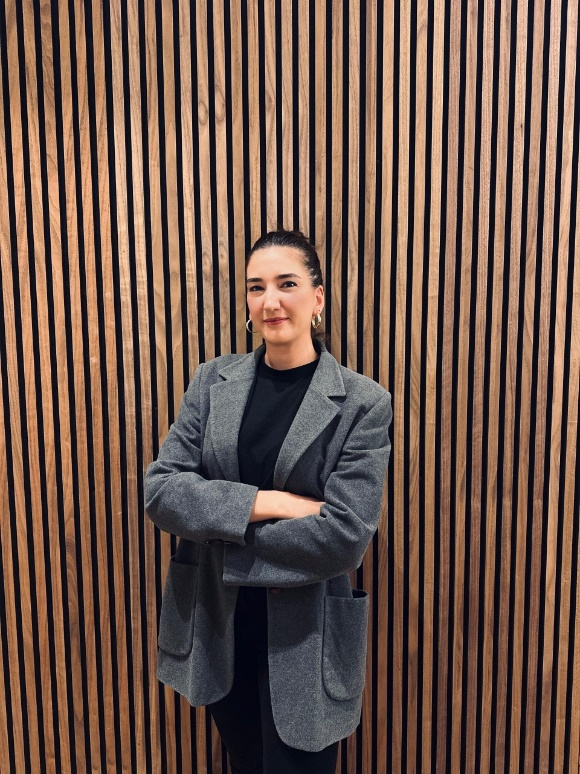
Nazenin Dino is an accomplished yachting professional based in Italy, currently serving as a Senior Interior Designer & Project Manager at the world-renowned international superyacht design studio Hot Lab in Milan. Alumna of the prestigious Politecnico di Milano, she brings a solid foundation in architectural rigor and high-end design methodology to the luxury marine sector.
With nearly a decade of dedicated experience in the yachting industry, Nazenin excels at managing complex interior projects entirely from early concept and spatial layout planning through to final technical execution and shipyard delivery. Her work perfectly embodies Hot Lab’s philosophy of "Architecture for Voyagers," balancing striking, elegant aesthetics with buildable, functional precision.
Beyond her active studio work, she is an influential voice in the maritime media space, contributing monthly as a Columnist for Motor Boat & Yachting Türkiye. Her articles dive into the evolving intersections of luxury yacht design, emerging technologies, and the delicate balance of modern craftsmanship.
Nazenin, your career journey has taken you from architectural education to becoming a Senior Interior Designer and Project Manager in the yachting industry. Could you share the story behind this path? What inspired you to enter the world of yacht design, and how has your architectural background influenced your approach to creating yacht interiors?
After studying architecture, I specialized further with a Master’s in Yacht Design at Politecnico di Milano. This allowed me to bring together my architectural background with the technical and emotional world of yachts. What attracted me to yacht interiors was their complexity: every millimeter has a purpose, and beauty must always work together with comfort, safety, engineering, and craftsmanship.
Today, as a Senior Interior Designer and Project Manager at Hot Lab, I work across both design development and project execution. I also write a monthly column for Motor Boat & Yachting Turkey, titled Tasarımcının Rotası, where I reflect on yacht design, interiors, materials, and life at sea.
For me, yacht interiors are complete spatial experiences. I think about circulation, volumes, light, ergonomics, material transitions, and atmosphere. In yacht design, beauty must feel effortless, while being carefully resolved behind the scenes.
As designers, you create unique visions that eventually need to be transformed into real living spaces on board. How important is the role of the manufacturing partner in preserving the original design intent throughout the production process?
In yacht interiors, even a small change in thickness, radius, grain direction, or finish can affect the final perception of the space. A good manufacturing partner protects the design while making it buildable. They know when to propose a technical solution, when to ask the right question, and when a detail must remain exactly as designed. The best results come when designer and manufacturer work as true collaborators with the same objective: to deliver an interior that is faithful to the concept and excellent in execution.
Hot Lab and MSM Yacht Interiors have collaborated on several projects. From your perspective, what aspects of this collaboration have contributed most to the successful realization of these projects?
Their experience in yacht interiors is also very important. Marine interiors require specific knowledge of weight, movement, tolerances, installation sequences, technical coordination, and durability. MSM’s ability to combine craftsmanship with this technical awareness has contributed significantly to the success of our projects.
Every yacht project comes with its own technical and creative challenges. Can you share an example where close cooperation between Hot Lab and MSM Yacht Interiors played a key role in achieving the desired result?
On our current 50-meter project, there have been several details where we worked closely together to preserve the intended proportions and refinement while adapting the construction logic to production and onboard installation conditions. What I appreciate in such situations is the ability to discuss alternatives without losing the essence of the design. Sometimes a detail needs to be reinterpreted technically, but it should still feel exactly as it was imagined. This requires trust, precision, and mutual understanding.
In your opinion, what qualities distinguish an exceptional yacht interior manufacturer from others, particularly from the perspective of a designer and project manager?
From a project manager’s perspective, sensitivity alone is not enough. A strong manufacturer must also be organized, reliable, proactive, and transparent. Timing, coordination, documentation, shop drawings, mock-ups, quality control, and installation planning are all part of the success of a project. The best manufacturers combine craftsmanship with discipline: they manage complexity, anticipate problems, communicate early, and understand their impact on the final experience of the yacht.
The yacht industry continues to evolve with new materials, technologies, and increasing owner expectations. How important is it for manufacturing partners to keep pace with these developments, and what trends do you believe will shape the future of yacht interiors?
I believe the future of yacht interiors will be shaped by interiors that feel more personal, tactile, and connected to the sea. We will see a stronger focus on natural materials, refined simplicity, sustainable solutions, integrated technology, and details that are almost invisible but highly considered. For manufacturers, the challenge will be to combine innovation with craftsmanship: to produce interiors that are technically advanced, but still warm, elegant, and timeless.
Looking back at your experience working with MSM Yacht Interiors, how would you describe the team's approach to craftsmanship, communication, and project execution? Are there any particular strengths that stand out to you?
One of their strengths is communication. In complex projects, not everything can be solved only through drawings; there must be an ongoing dialogue between the design team, the manufacturer, the shipyard, and other parties involved. MSM’s team has been open to this dialogue and willing to find solutions together. For me, a successful collaboration is one where the final result feels natural, as if the design was always meant to be built that way. MSM’s contribution to this process is an important part of bringing our designs to life.