
Product Design Lead
From Design to Delivery: Project Management in Mega Yacht Interior Fit-Outs
The mega yacht industry is one of
the most multidisciplinary sectors, where advanced engineering standards and
sophisticated design come together to create exceptional living environments.
Today, mega yachts are no longer viewed simply as a means of transportation.
They are highly personalized living spaces designed to deliver a unique and
luxurious onboard experience. As a result, interior design has evolved beyond
aesthetics alone, becoming a comprehensive project management process that
integrates production technologies, material engineering, ergonomics, quality
management, and detailed project planning.
The development of a mega yacht
interior involves a series of interconnected stages, including analysing client
requirements, developing designs that are both creative and manufacturable,
preparing technical drawings, managing production processes, and coordinating
installation activities. Effective management of each stage is essential to
ensure that the project is completed on schedule, within budget, and in
accordance with the required quality standards.
This study examines the complete
lifecycle of mega yacht interior projects, from design development to final
delivery, through the perspective of project management. It aims to evaluate
the key phases of the process, including design development, production
planning, implementation, quality control, and final handover, while
highlighting current industry practices and the critical factors that
contribute to successful project execution.
In mega yacht projects, the
design process begins with a thorough understanding of the owner's
expectations, lifestyle, and daily habits. In addition to aesthetic
preferences, functional requirements play a key role in shaping the overall
design. During this stage, concept proposals are supported by mood boards,
three dimensional models, rendered visualizations, and material boards,
allowing the owner to clearly visualize the intended interior before production
begins.
The design is further refined
with careful consideration of manufacturability, ease of maintenance,
installation methods, and long term durability. Particular attention is given
to furniture that will be used in the marine environment, where lightweight construction,
structural strength, and safety are essential to ensure reliable performance
and lasting quality.
One of the most critical factors
determining the success of a mega yacht project is effective interdisciplinary
coordination. The interior design team works in close collaboration with naval
architects, electrical engineers, mechanical engineering teams, HVAC
specialists, classification societies, and production teams throughout every
stage of the project. Continuous communication between these disciplines is
essential to ensure that design intent, technical requirements, and production
constraints are fully aligned.
Today, many shipyards use
Building Information Modeling (BIM) and three dimensional coordination software
to identify and resolve conflicts between different disciplines before
production begins. This proactive approach minimizes costly modifications during
manufacturing and installation, improves workflow efficiency, and contributes
to the successful delivery of high quality yacht interiors.
Materials used in mega yacht
interiors must satisfy not only aesthetic expectations but also comply with
international maritime standards. Wood veneers, natural stone, composite
materials, metal finishes, textiles, and upholstery are carefully evaluated based
on fire resistance, moisture resistance, ultraviolet resistance, and weight
requirements to ensure both safety and long term performance.
The primary criteria considered
during material selection include:
From a project management
perspective, the procurement process is of critical importance. Delivery times
for specialized and imported materials can often extend to several months. For
this reason, procurement planning is carried out simultaneously with the design
process to ensure material availability, maintain the project schedule, and
avoid delays during production and installation.
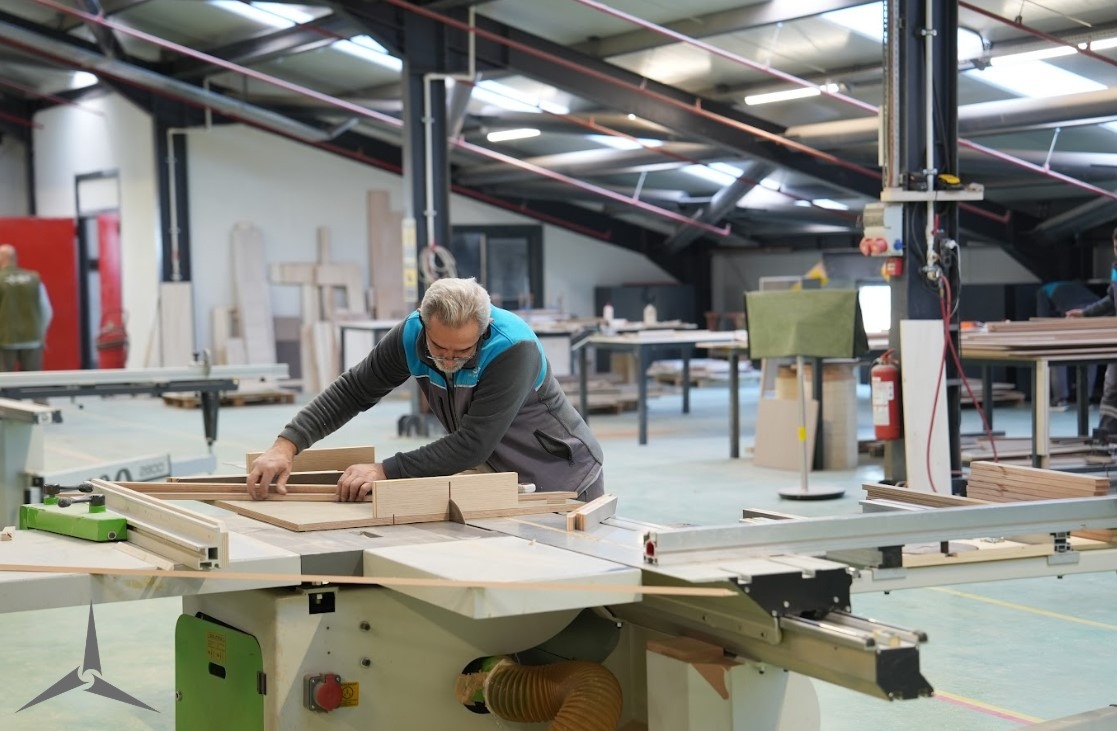
Interior production is generally carried out using CNC
machining centres, laser cutting systems, vacuum press technologies, and
precision woodworking techniques.
Before production begins:
• A production schedule is prepared.
• Workshop capacity is planned.
• The manufacturing sequence is established.
• Quality control checkpoints are defined.
Throughout this process, production engineers and the design
team work in continuous communication. Any revisions that may arise during
manufacturing are managed efficiently through fast decision making processes,
ensuring that the project remains aligned with the design intent, production
requirements, and overall schedule.
Modules completed in the
workshop are transported to the yacht according to the predetermined
installation plan.
Installation works on mega
yachts are carried out with extremely precise tolerances. Due to the geometry
of the yacht hull, marine conditions, and manufacturing tolerances, dimensional
variations may occur during the construction process.
At this stage, the primary responsibility of the project manager is to coordinate the working schedules of different teams, prevent time losses, and ensure that occupational health and safety procedures are properly implemented throughout the installation process.
6.Quality Control and Delivery Process:
In mega yacht projects, quality control is not simply a process carried out at the end of production. An integrated quality management system is implemented throughout the entire project lifecycle, from the initial design stage to the final delivery process.
Before delivery, deficiency lists
known as "punch lists" are prepared, and user acceptance tests are
conducted after all identified issues and corrections have been completed.
During the final handover stage,
maintenance manuals, warranty documents, material catalogues, and technical
documentation are provided to the client, officially completing the project.